
When evaluating power washing companies near me, property owners need to look beyond raw water pressure and choose contractors who match specific cleaning methods to each building material. A reliable exterior cleaner utilizes commercial-grade equipment, carries active liability insurance, and understands when to apply heat, standard pressure, or low-pressure chemical washing to avoid structural damage. Choosing the right local team ensures deep cleaning for hardscapes and siding while safeguarding your landscaping and exterior fixtures.
Choosing Power Washing Companies Near Me: 7 Key Factors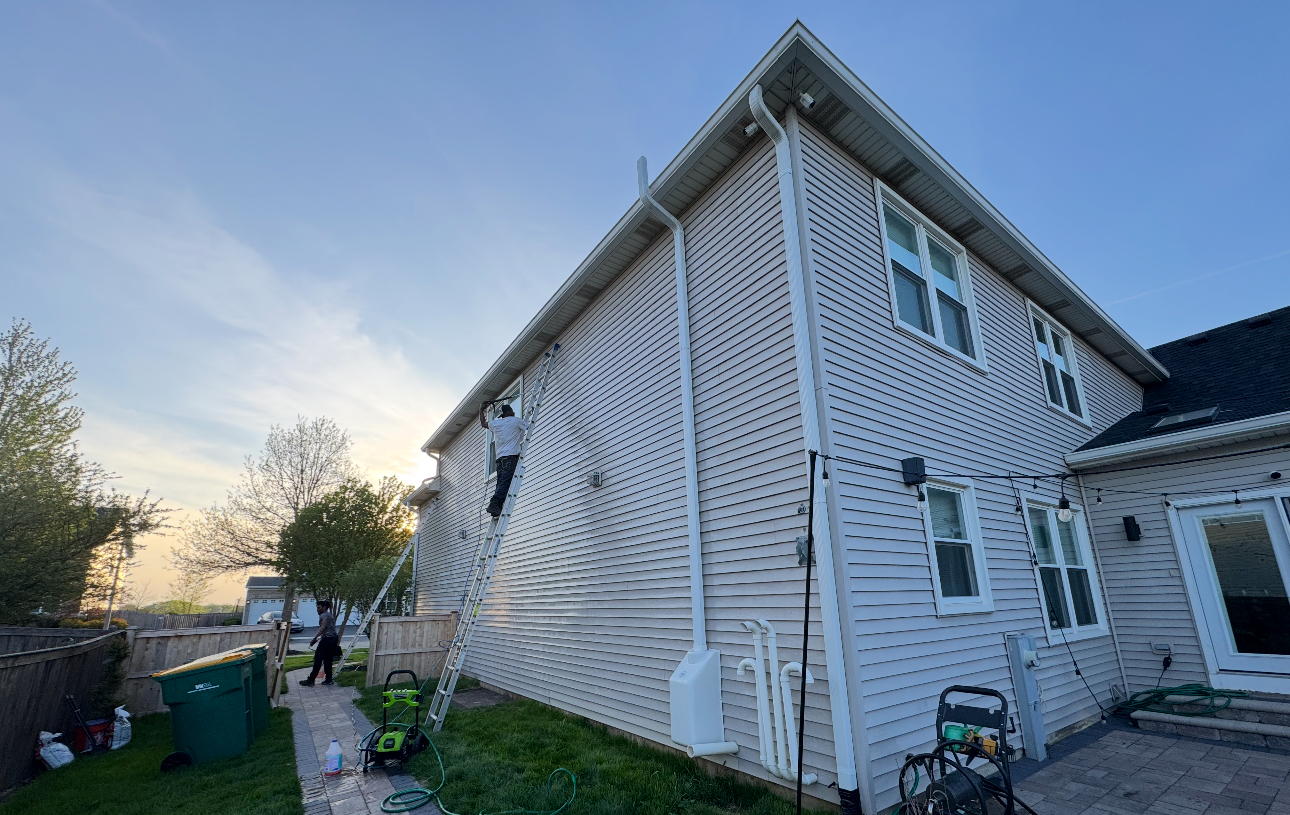
What to Look for When Comparing Power Washing Companies Near Me
Selecting a dependable exterior cleaning team in Naperville and the greater Chicagoland area requires evaluating how a company operates on site. Blasting high-pressure water at every surface causes costly structural issues, from stripped paint to ruined window seals. Property owners should assess prospective cleaners against a strict set of operational standards before booking a crew.
1. Verified Insurance and Property Protection Standards
Never hire an exterior cleaning contractor without verifying active general liability insurance. High-pressure washing equipment operates under intense force; an untrained technician can easily etch decorative concrete, shatter double-pane window seals, or force gallons of water behind siding. Ask for proof of insurance that specifically covers exterior surface restoration and chemical run-off protection for surrounding lawns, shrubs, and ornamental gardens.
2. Dedicated Soft Washing Capabilities for Delicate Surfaces
A capable contractor must offer dedicated soft washing rather than relying exclusively on high-pressure water. Soft washing uses high-volume, low-pressure water streams paired with specialized detergents to eliminate algae, mildew, lichen, and moss at the root. This technique is mandatory for asphalt shingle roofs, vinyl siding, painted wood, and dry-vit or stucco surfaces where intense pressure causes immediate surface degradation.
3. Surface-Specific Equipment for Concrete, Brick, and Siding
Professional crews do not clean an entire property using a single wand tip. Look for contractors who bring rotary flat-surface cleaners for driveways and walkways, dual-lance wands for variable pressure adjustments, and adjustable chemical injectors. Rotary surface cleaners use dual spinning nozzles under a hover cover to deliver uniform cleaning without leaving the streaky, etched "wand marks" common with amateur work.
4. Same-Day or Flexible Appointment Scheduling
Exterior grime, grease build-up, and seasonal salt deposits often require prompt attention, particularly before outdoor events or commercial inspections. Reputable local companies maintain responsive dispatching and offer flexible scheduling windows. When sudden oil spills occur on commercial flatwork or moss spreads across residential walkways, having access to prompt local service prevents stains from setting permanently into porous masonry.
5. Multi-Service Capabilities Beyond Just Blasting Water
Properties rarely need only flatwork washing. Working with a company that integrates comprehensive exterior maintenance saves time and reduces mobilization fees. Look for providers that handle complementary services such as gutter cleaning, surface sealing, and exterior repairs alongside their main washing operations.
6. Transparent Estimates Without Hidden Water or Chemical Fees
A professional estimate clearly itemizes the scope of work, substrates to be cleaned, and application methods. Be cautious of contractors who provide vague verbal quotes over the phone without reviewing surface square footage or water source availability. Reputable companies clearly state whether detergent applications, post-wash surface treatments, or specialized hot-water degreasing are included in the baseline rate.
7. Workmanship Guarantees That Protect Trim and Seals
Top-tier contractors stand behind their cleaning procedures. This means guaranteeing that soffits, fascia boards, flashing, and window seals will remain intact throughout the washing process. A true workmanship guarantee means the crew returns to address any missed organic staining or uneven surface patterns without hassle.
Power Washing vs. Pressure Washing: Which Method Does Your Property Need?
While homeowners often use the terms interchangeably, power washing and pressure washing rely on distinct mechanical principles.
* Pressure washing uses mechanical pumps to generate high-velocity water at ambient temperature. It relies purely on kinetic force and light detergents to strip dirt, loose paint, and surface debris from resilient surfaces.
* Power washing adds a heating unit (a hot-water boiler system) to the setup. Heating the water breaks down petroleum bonds, heavy grease, chewing gum, tree sap, and embedded Chicagoland winter road salts far faster than cold water can.
| Feature | Pressure Washing | Power Washing | Soft Washing |
|---|---|---|---|
| Water Temperature | Cold / Ambient | Heated / Near-Boiling | Cold or Warm |
| Pressure Level | High to Very High | High to Very High | Very Low (Garden hose pressure) |
| Primary Mechanism | High kinetic velocity | Heat + Kinetic velocity | Specialized cleaning agents |
| Best Used For | Unsealed concrete, stone walkways, metal prep | Oil-stained driveways, commercial dumpster pads, grease spots | Vinyl siding, cedar shakes, roof cleaning, composite decks |
| Substrate Risk | Etches wood; strips mortar | Gouges soft brick; damages vehicle paint | Minimal risk to building materials |
High-pressure water—whether hot or cold—should never touch asphalt roof shingles. Blasting shingles strips the protective ceramic granules directly off the fiberglass mat, dramatically shortening the roof's lifespan. Similarly, using high pressure on historical brick degrades the soft interior clay once the hardened outer glaze or aged mortar joints are breached.
How Commercial and Residential Exterior Cleaning Requirements Differ
Residential and commercial properties face distinct environmental contaminants, requiring specialized cleaning approaches.
Residential Washing Priorities
On residential homes, the priority is protecting structural components and landscaping. Crews must:
- Pre-wet perimeter shrubs, turf, and flower beds before and after applying detergents to dilute any chemical overspray.
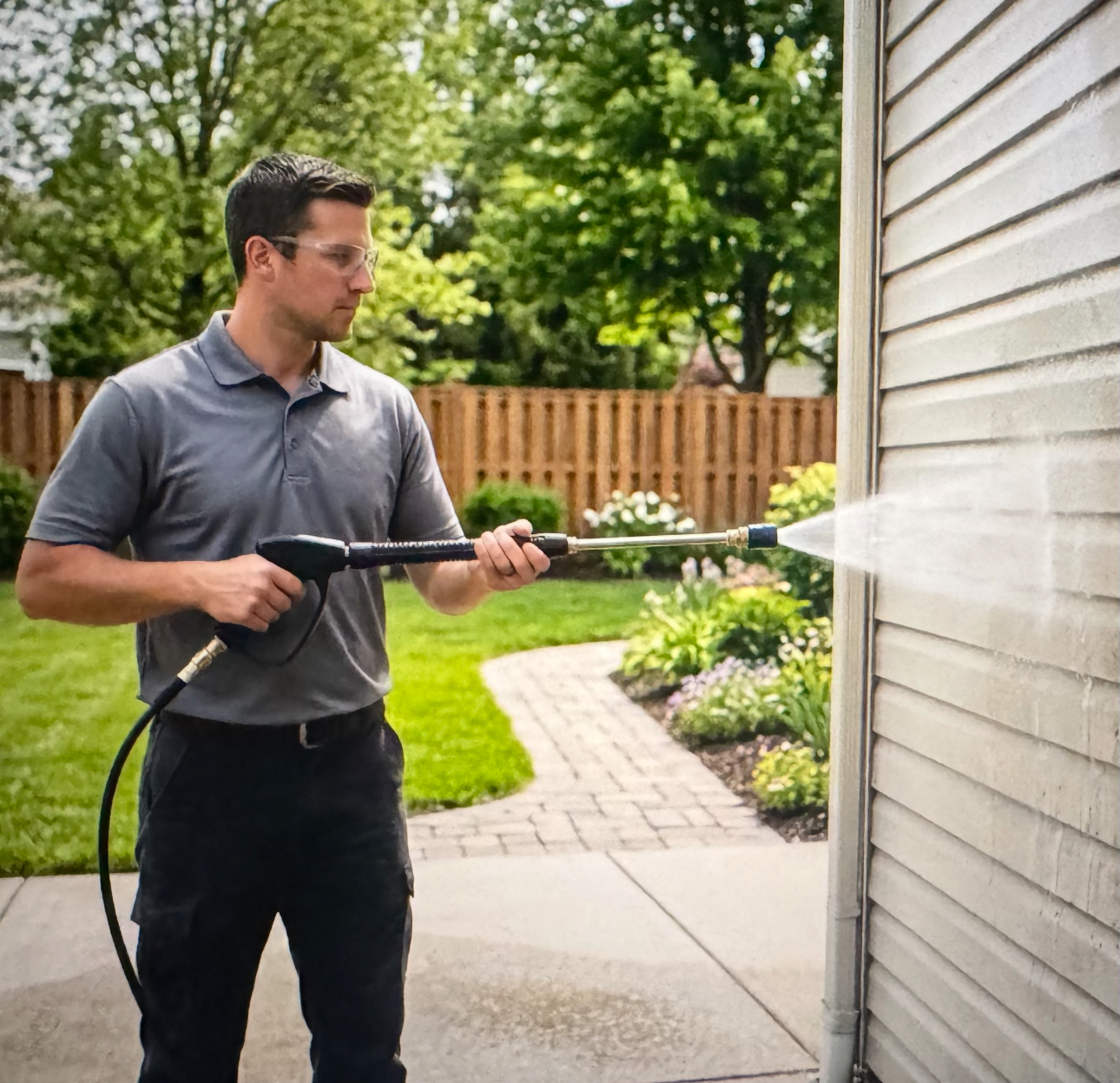
- Direct low-pressure spray downward at an angle to avoid forcing moisture beneath vinyl siding laps or into wall insulation.
- Keep pressure away from exterior electrical outlets, outdoor light fixtures, and window caulking lines.
Commercial Facility Cleaning Challenges
Commercial properties demand heavy-duty degreasing and coordinated logistics. Cleaning commercial plazas, bank drive-thrus, industrial loading docks, and restaurant dumpster pads requires heated water to dissolve built-up grease, hydraulic fluid, and food residue.
Commercial projects frequently require off-hours scheduling—such as late evenings or early mornings—to prevent chemical drift over customer vehicles and ensure public safety along walkways. Working with an experienced exterior contractor that coordinates pressure washing alongside routine handyman repair keeps commercial facilities compliant and safe for foot traffic.
Red Flags to Watch Out for When Hiring Local Exterior Cleaners
Not every company with a pressure washer in a truck bed knows how to treat different building envelopes safely. Watch for these warning signs:
- Using high pressure on siding or roofing: If a technician steps out of their truck intending to wash vinyl, wood siding, or asphalt shingles using a narrow high-pressure red or yellow tip, stop the job immediately. Siding requires high-volume, low-pressure application to kill algae without driving moisture behind the weather barrier.
- Ignoring landscaping and chemical run-off: Unprofessional operators spray caustic bleaches or acids without pre-wetting the surrounding soil or covering delicate plants. Chemical run-off quickly burns lawn edges, browns hedge leaves, and can poison surrounding soil.
- No proof of insurance or business registration: If an uninsured cleaner fractures a double-pane window, strips a section of deck stain, or slips on your walkway, you could be held liable for property repairs and medical expenses.
Getting the Most Value from Your Exterior Cleaning Service
Getting full value from your exterior cleaning investment requires proactive maintenance planning and proper site preparation.
Bundling multiple exterior services into a single service visit significantly lowers total maintenance expenses. Pairing surface washing with roof treatment, gutter clear-outs, and window detailing eliminates repeat setup costs and prevents grime from higher building sections from washing down onto newly cleaned flatwork below.
Preparing Your Property for the Crew
Before the cleaning truck pulls up to your home or facility, complete this quick preparation checklist:
- Close and lock all windows: Secure every latch to ensure weatherstripping seals tightly against high-volume water rinse cycles.
- Clear the perimeter: Move patio furniture, potted plants, doormats, grills, and children’s toys at least twenty feet away from the wash zone.
- Secure exterior electrical fixtures: Ensure outdoor outlet covers are shut tight, and disconnect extension cords or low-voltage landscape lighting timers.
- Check water access: Locate your exterior hose spigots and ensure the outdoor water supply is switched on from inside the basement or utility room.
- Keep pets indoors: Keep all pets inside and clear of the work area until all treated surfaces are fully rinsed and dry.
Heritage Rescue & Repair provides Handyman Repair, Exterior Lighting, Roof Cleaning for Homeowners, landlords, property managers, and commercial real estate professionals across Aurora and Chicagoland. Evaluating equipment, methods, and credentials ensures you choose qualified power washing companies near me that deliver long-lasting cleanliness without risking property damage.
Frequently Asked Questions
What is the difference between pressure washing and power washing?
Power washing utilizes heated water systems to break down grease, heavy oil stains, tree sap, and embedded winter salt deposits on durable surfaces. Pressure washing uses ambient, unheated water delivered at high kinetic velocity to clean general surface dirt from non-porous materials like concrete flatwork.
Can high-pressure power washing damage my siding or roof?
Yes. Excessive water pressure strips the protective mineral granules from asphalt roofing shingles, cracks aged brick mortar, and easily forces water beneath vinyl siding into the wall cavity. Roofs and siding should exclusively be cleaned using low-pressure soft washing techniques.
What should I do to prepare my home before a power washing appointment?
Homeowners should tightly close and lock all windows, unplug outdoor extension cords, clear vehicles and patio furniture from driveways and decks, and ensure the exterior water spigot is fully turned on and accessible.
How do local power washing companies price their jobs?
Exterior cleaning pricing depends on the total square footage of the treatment area, the substrate material, the severity of organic growth or grease staining, chemical requirements, and the staging equipment needed to access elevated surfaces safely.